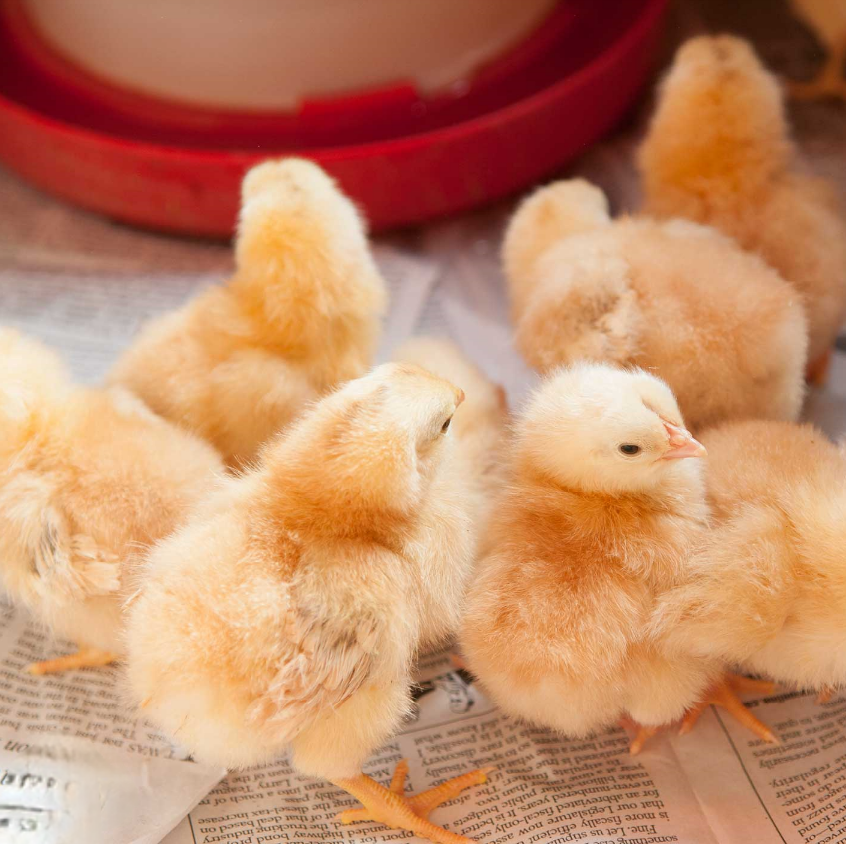
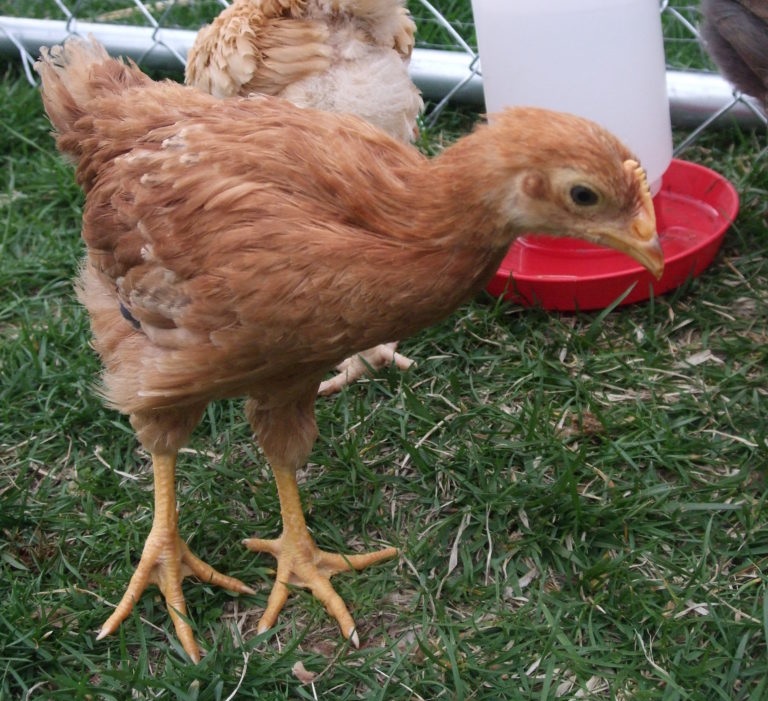
New Hampshire Female Chicks DOB 2/11/26

$9.00

HENS! – FAST GROWING Chickens!

LOCAL PICK UP ONLY!

Great dual purpose bird! GREAT WINTER EGG LAYERS!

43 in stock

Description

The New Hampshire was overshadowed by the success of the Rhode Island Red, even though they created the two just several years apart. The fact that they look very similar may have had something to do with it.

This is a shame since this bird has much to offer the modern homesteader as a true dual-purpose hen.

The origins of the New Hampshire hen are less than one hundred years old. It was developed in New Hampshire and Massachusetts as a separate strain of Rhode Island Red chickens.

Around 1910 or so, poultry breeders of New Hampshire were selecting hens for faster feathering, faster growth and maturity from the Rhode Island Red strains that were around at the time.

The honor of creating this breed went to Professor ‘Red’ Richardson, who was working in one of the Agricultural Experimentation Stations at the time.

They were also selecting for good egg laying ability but especially good meat production.

To promote the breed, they initially used it in the ‘Chicken of Tomorrow’ contests popular in the US in the late 1940s.

While the New Hampshire breed didn’t win the contest, it did become one of the first breeds to establish the broiler industry. They also used them to create the Delaware chicken breed, another short lived star of the broiler industry.

The New Hampshire is roughly the same size as the Rhode Island Red but the body has a more triangular form to it.

It has a deep, broad body and is an all-round large, meaty bird; plump would be the word of choice.

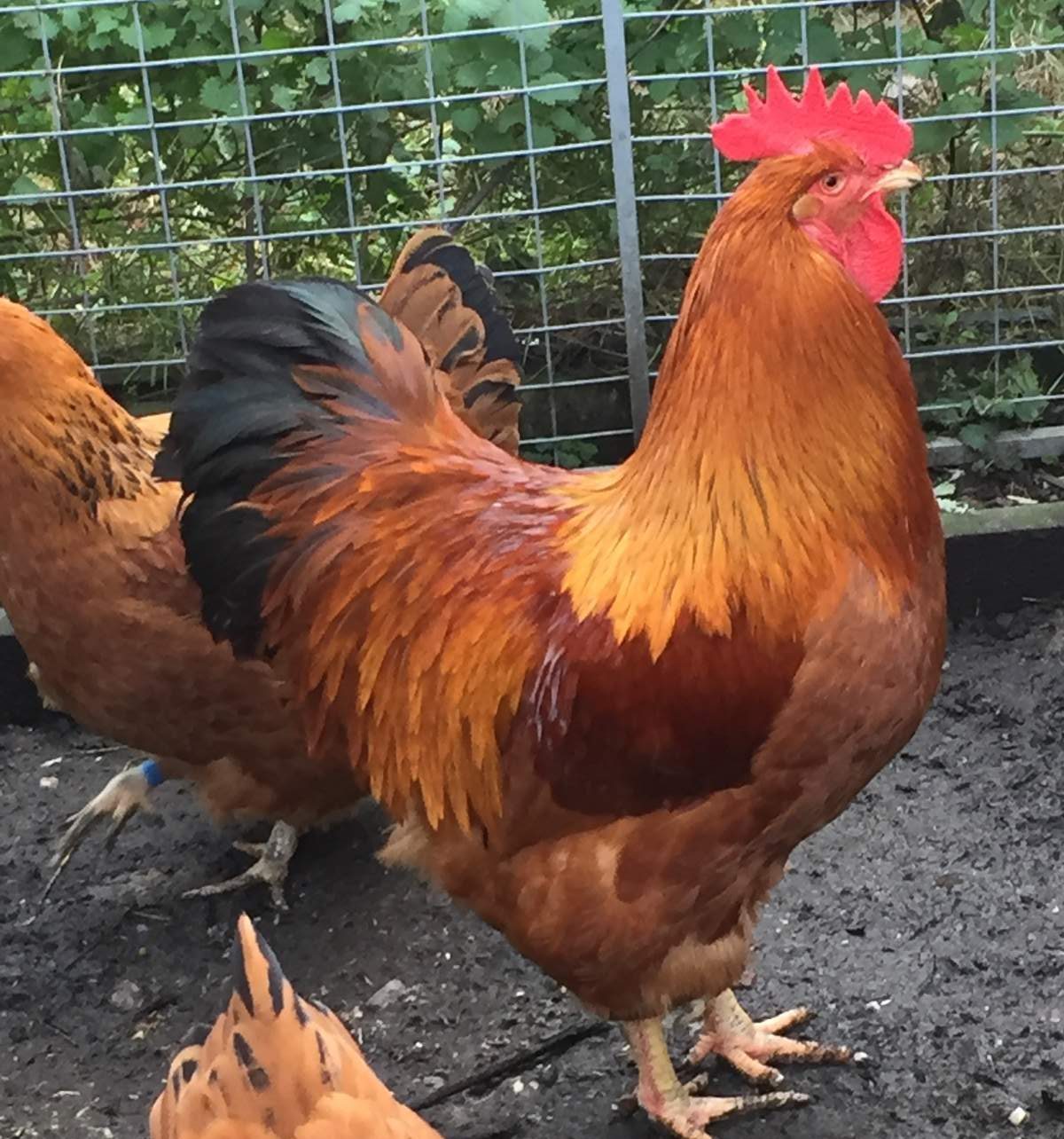
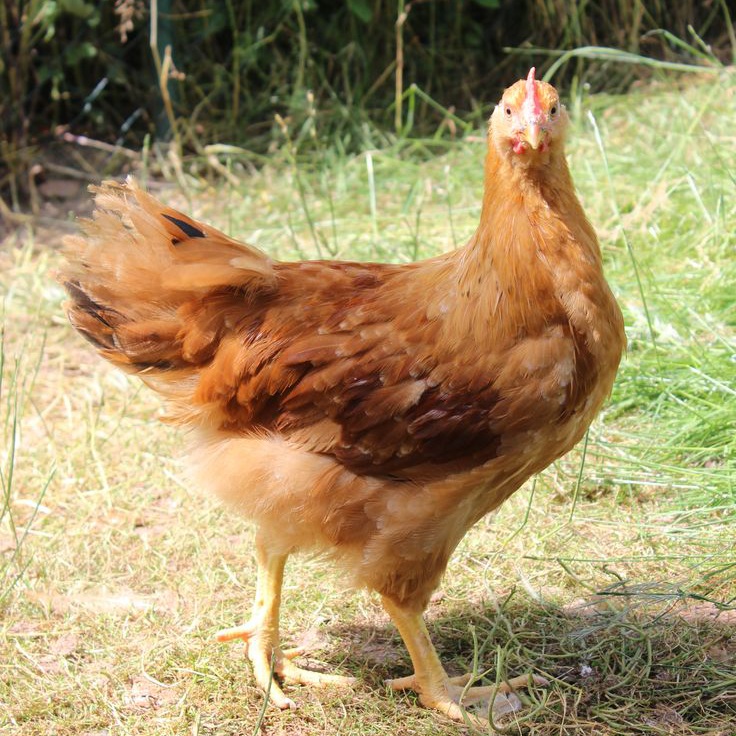
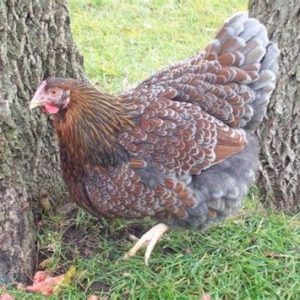
The feather coloration is quite different from the Rhode Island bird. Feathers are usually a lighter shade of red. While the Rhode Island coloration could be said to be mahogany, the New Hampshire is nearer to a chestnut shade with occasional pale yellow highlights.

In sunlight the feathers do bleach out to a lighter shade of red.

The hens’ neck feathers are black tipped as are the tail feathers too. Under feathers are a light salmon color. The red comb is single which can be quite floppy with the hen. Ear lobes and wattles are also red.

Eyes are orange while the beak is a reddish/horn color.

Shanks are clean and there is a reddish line that runs down the shanks to the toes, of which there are four. Shanks and toes are yellow in color, as is the skin.

New Hampshire Standard

New Hampshire Chicken RoamingIt took several years of development and several generations of birds for the New Hampshire breed to be significantly different from the Rhode Island Red (its’ forbears).

Work on the breed started around 1910 and the breakthrough came in 1918.

Through further refinement and a drawing up of standards, the New Hampshire was finally admitted to the American Poultry Association in 1935 as a separate breed.

  • The APA classifies the bird as American.
  • The American Bantam Association classifies it as single comb, clean legged.
  • The Poultry Club of Great Britain designates it as a soft feathered, heavy breed.

Egg Laying and Temperament

The New Hampshire is a good egg layer of around 200 large tinted/light brown eggs per year; this equates to about 3 eggs each week.

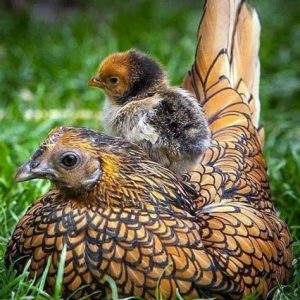
They also can go broody fairly frequently and are good setters. If allowed to hatch their own they make great mothers too!

Some broodies have been known to accept other chicks under them too, but naturally this will vary from hen to hen.

The New Hampshire is a family friendly bird, making great pets as they are easy to tame.

As a medium sized bird, they can be quite food aggressive and are willing to push and shove flock mates out of the way; certainly not a good thing if you have shy, docile breeds already.

However,r you can reduce this bullying behavior by having several feeding stations spread apart from each other.

Obviously their personalities will vary greatly so be aware they can be docile and lovable to unfriendly and aggressive.
Additional information

INFO

Benefits of Raising New Hampshire Chicken

They have a variety of personalities. Some of them have a calm nature, while others are very aggressive. But most of them are docile and curious.

You can raise New Hampshire chickens in either a free-range system or a confined area. They are healthy, which means they are resilient hens without major issues, as noted by the health department.

This chicken is a good dual-purpose bird, but people use it as a meat chicken. Also, New Hampshire’s are pretty good layers. They are gorgeous, not noisy, and very friendly and hardy.

Caring and Raising Tips for New Hampshire Chickens

Here are some of the tips that you should consider before raising this breed of chicken:

This New Hampshire chicken can handle high temperatures, but they need to rest in a shady area.
Because they are free-range chickens, they will require access to a lawn or backyard to graze.
Feed New Hampshire Reds high-quality protein-rich feed to improve their meat and eggs.
During the winter, keep the coop warm.
Even during winter months, increase the diet of this New Hampshire chicken because they lay the most eggs.
Regular health checks for parasites and other issues will be beneficial.
New Hampshire Chickens

The New Hampshire Chicken is an American breed that was developed in 1910 in the New England states. Breeders now choose them because they can be used for both meat and egg production.

Its early maturity, fast-growing, and fast feathering makes it a popular breed. Their hens have good laying ability, and they make good table birds. The chicken breed is in high demand due to its features.

It’s a hybrid chicken primarily developed as a commercial breed for meat production, but now it is on the list of good egg-laying chickens.

New Hampshire chickens produce more meat than their parent chicken breed (Rhode Island Red). It was first standardized by the American Poultry Association in 1935.

Common Names of New Hampshire Chicken

The New Hampshire Chicken, also known as the New Hampshire Red, originates in New Hampshire, United States.

History of New Hampshire Chickens

The New Hampshire chicken breed was developed in 1915 in New Hampshire in the United States from a strain of Rhode Island Red. The American Standard of Perfection recognized the newly formed breed in 1935.

It represents a selection, especially, of the Rhode Island Red breed. Thereafter, through intensive selection for early maturity and vigor, fast weathering, and rapid growth, a different breed gradually emerged.

This event took place in the New England States, mainly in New Hampshire and Massachusetts, where it derived its name.

Lifespan of New Hampshire Chickens

New Hampshire chickens have a lifespan of about 6 years. With adequate shelter and nutrition, they may live a longer life.

New Hampshire Chicken Egg Color, Size, and Broodiness

The New Hampshire Red is a dual-purpose chicken breed that is primarily raised for egg production. However, this is currently a popular meat bird. Each hen lays 250–280 eggs per year, or around five eggs each week.

Their eggs are large in size and tinted in color. The color of the egg is dependent on the strain of New Hampshire hen you have.

But, in general, most of them produce eggshells of a brown color. They lay medium-sized eggs, and the bird continues to lay eggs throughout the year.

New Hampshire chickens often go broody frequently and are good setters. If they are allowed to hatch on their own, they become good mothers too.

Some breeds of this New Hampshire chicken often accept baby chicks from other hens too, but this property varies from hen to hen.

Temperament of New Hampshire Chicken

Some of them have calm and docile personalities, while others are very aggressive. New Hampshire chickens are family-friendly birds, and they seem like great pets as you can tame them easily.

New Hampshire Reds are aggressive toward food and will push and nudge their flock mates away from their path. It’s not a good idea to have shy chicken breeds in your flock if you already have New Hampshire Reds.

To stop or reduce their bullying behavior, you can opt to have several feeding sessions, and the feeding should be done apart from each other.

As their personalities vary greatly, be aware that they can be docile and lovable or unfriendly and aggressive.

Color, Size, Appearance, Characteristics of New Hampshire Chicken

The skin color of the New Hampshire chickens is yellow, and their sizes are roughly the same as the Rhode Island Reds, but their bodies are triangular.

They have a deep broody body, and so people consider them a large round meaty bird, and you can use the word plump for them.

The coloration of feathers is different from the Rhode Island Red, and their feathers usually have a lighter shade of red. Still, the Rhode Island Red has a mahogany coloration, and the New Hampshire Red has a chestnut shade and has pale yellow highlights.

The color of New Hampshire chickens is shaded red in the shade, but lighter red in sunlight. Their neck feathers and tail feathers have black tips.

They have a light salmon color under their feathers and a single red comb, which is floppy with the hen. The color of the wattles and ear lobes is also red. Their eyes are orange, and their beaks are a reddish horn color.

Their shanks are clean, and a reddish line runs down the shanks to the toes, while the color of the shanks and toes is yellow.

New Hampshire Reds are medium-sized birds, and they weigh around 6 to 8 pounds. Bantam versions of this breed are also available, and the bantam usually weighs between 30 and 34 ounces.

Characteristics

This chicken breed reaches maturity faster than other chicken breeds, and their feathers grow faster as well.

They have a deep and broad body. New Hampshire chickens are often prone to going broody. Many chickens of this breed have pin feathers with a reddish, brownish, or buff color.

Their color is a medium-light red, which fades in the sunshine. The chickens of New Hampshire possess a single comb, whose size varies from medium to large.

For females, their combs often lop over a bit. They are good layers of chicken, but people raise them for their meat requirements

Reviews

There are no reviews yet.

Only logged in customers who have purchased this product may leave a review.